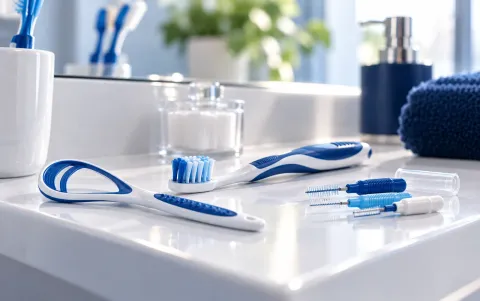
Electric or Manual Toothbrush?
Sonic, rotating or classic: which toothbrush makes sense for whom, and the most common brushing mistakes.


The choice in the chemist’s is huge. The good news: you can brush well with any toothbrush – technique is what counts. Electric toothbrushes, however, make it easier for many people.
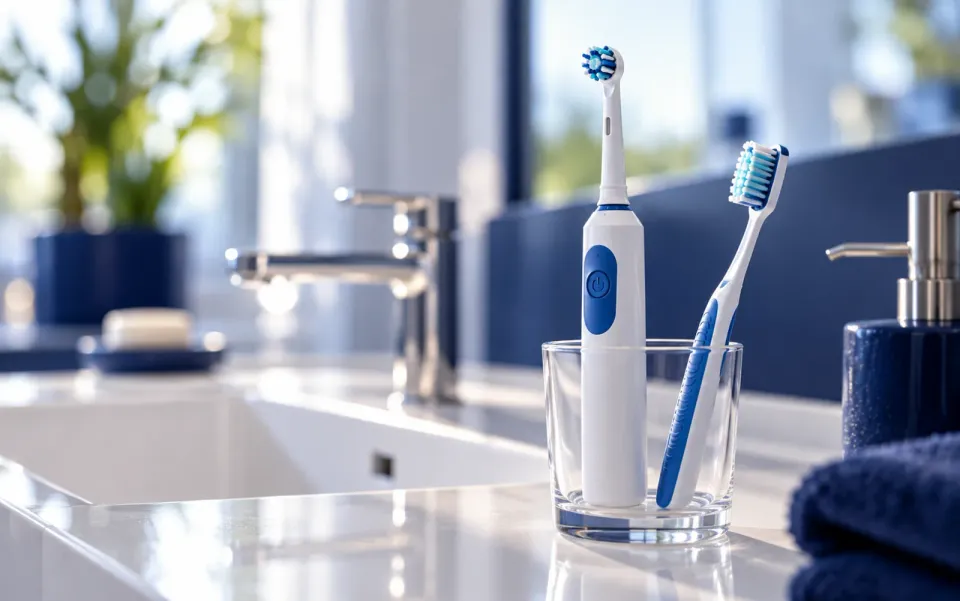
Studies show that electric toothbrushes – especially oscillating-rotating ones – on average remove somewhat more plaque and reduce gum inflammation more than manual toothbrushes. But if you brush systematically and gently with a manual toothbrush, you can also achieve good results. What matters are soft bristles, two minutes of brushing and little pressure.
| Manual toothbrush | Electric (rotating/sonic) | |
|---|---|---|
| Cleaning effect | good with good technique | slightly better on average |
| Pressure control | no | often built in |
| Timer | no | yes |
| Cost | low | higher, replacement heads |

The most common brushing mistakes
- too much pressure – damages the gums and tooth necks
- scrubbing horizontally across the teeth
- always starting in the same place and losing focus at the back
- forgetting the inner surfaces and the last molars
- brushing hard straight after acidic food
Book your appointment at the Zahnarztpraxis St. Peter – via online booking or by phone on 0911 554181. You will find us at Hainstraße 25, 90461 Nürnberg (tram 6/10 to Scharrerstraße, patient parking via Scharrerstraße).
Frequently asked questions
How often should I change the brush head?
About every three months, or sooner if the bristles are splayed.
Which toothpaste?
A fluoride toothpaste (for adults usually 1,450 ppm fluoride). There are special toothpastes for sensitive teeth.
This article is a translation of our German guide and does not replace a personal examination and consultation. If you have symptoms, please see a dentist – for example at the Zahnarztpraxis St. Peter in Nuremberg.