Dentist Nuremberg St. Peter
Root Canal Treatment in Nuremberg
Endodontics under the dental microscope: we clean, disinfect and seal inflamed root canals – so that your own tooth can be saved.


A throbbing pain that gets worse at night, a tooth that reacts to heat, or a swelling on the gum: often an inflamed dental nerve (pulp) is behind it. Root canal treatment is then often the last chance to save the tooth. This is exactly what our dental practice in Nuremberg-St. Peter specialises in: we treat root canals with a dental operating microscope, rotary instruments and electronic length measurement.
In root canal treatment we remove the inflamed or dead tissue from inside the tooth, clean and disinfect the root canals and seal them tightly. Under the operating microscope even fine, curved or additional canals can be found – which improves the chances of keeping your own tooth for the long term.
When is root canal treatment necessary?
Inside every tooth lies the pulp with nerves and blood vessels. If bacteria reach it – usually through deep decay, a crack or a leaking filling – the tissue becomes inflamed. Without treatment the inflammation can spread into the jawbone at the root tip. Typical signs are:
- persistent, often throbbing pain, especially at night or when lying down
- strong sensitivity to heat or cold that lingers
- pain when biting or tapping on the tooth
- a swelling or a “pimple” (fistula) on the gum
- a darkly discoloured tooth – sometimes without any pain
Not every pain means a root canal. With a cold test, a percussion test and an X-ray we find out whether the nerve can still be saved or whether root canal treatment is the right way forward.
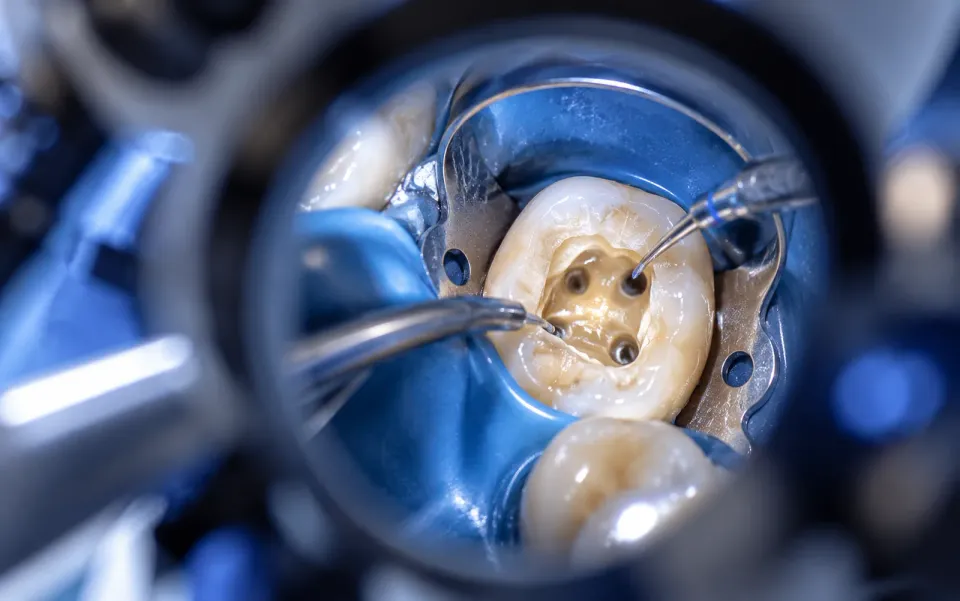

How root canal treatment works at our practice
Procedure- Examination and X-rayWe check the tooth, explain the findings and discuss the chances of success and possible alternatives.
- Local anaesthesiaThe tooth is reliably numbed. As a result, the treatment itself is usually no more uncomfortable than a filling.
- Rubber damA thin rubber sheet isolates the tooth. No saliva with bacteria gets into the canals, and rinsing solutions stay where they belong.
- Access and shaping under the microscopeWe expose the canal openings and widen the canals with flexible nickel-titanium instruments.
- Electronic length measurement and irrigationA device measures the length of each canal down to the root tip. Disinfecting solutions also reach areas that instruments cannot.
- Medicated dressing (if needed)In case of severe inflammation, medication stays in the tooth for a few days before we continue.
- Root filling and tight sealThe canals are filled tightly with gutta-percha and a sealer, and the tooth is sealed against bacteria.
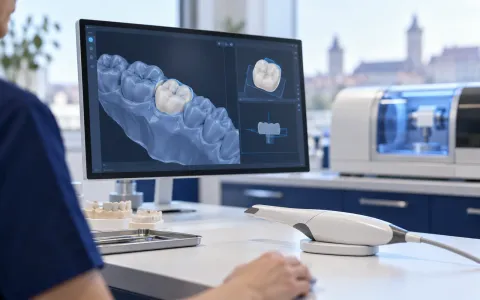
- Stable restorationRoot-treated back teeth become more brittle. We therefore often recommend a partial crown or crown – precisely made with CAD/CAM.
Why the operating microscope can make the difference
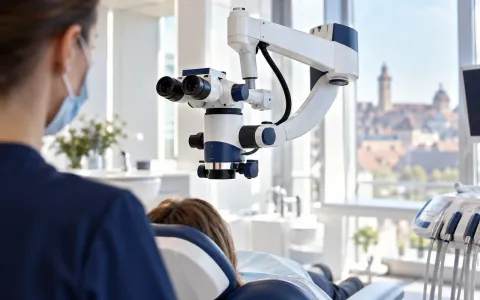
Root canals can be thinner than a millimetre, curved and branched. Upper molars in particular often have an additional canal that is hard to find. If a canal is left untreated, bacteria can survive – and the inflammation returns. The dental operating microscope magnifies the treatment area many times over and illuminates it directly. This lets us see canal openings, cracks or old filling materials that remain hidden to the naked eye.
Retreatment: when an old root filling causes problems
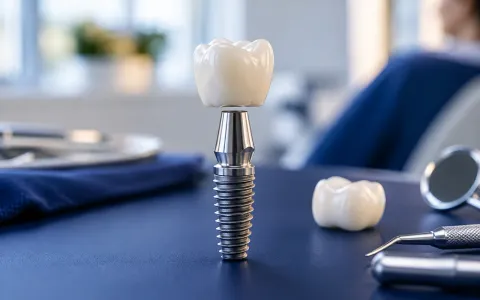
Even years after a root canal, inflammation can develop at the root tip – for example if a canal was missed or the filling is leaking. In many cases the tooth can be saved with a retreatment: we remove the old root filling, clean again and seal tightly. If that is not possible, an apicoectomy may be an option. Only if the tooth cannot be saved do we talk about replacing it, for example with an implant.
Endodontics in Nuremberg: root canal treatment as a focus
Endodontics (also called endodontology) is the field of dentistry that deals with the inside of the tooth and the root canals. Anyone looking for an endodontist in Nuremberg usually wants exactly this: a practice that does not treat root canals as a sideline, but with special equipment and a great deal of experience. Endodontics is a focus of our practice: we work under the operating microscope, with rubber dam, rotary instruments and electronic length measurement.
Patients come to us from all over Nuremberg and the region – including for difficult cases: severely curved or calcified canals, missed additional canals, the retreatment of an old root filling, or a second opinion before a tooth is extracted.
Costs
How complex a root canal treatment is depends on the tooth, the number and shape of the canals and the degree of inflammation. We always discuss the costs before treatment – in writing and in plain language. Many supplementary dental insurance policies reimburse tooth-preserving treatment. More in our guide Root canal treatment: what the costs depend on.
Root canal treatment is almost always worthwhile if the tooth still has enough healthy substance and the gums are healthy. Your own tooth is usually the best solution – cheaper and more natural than any replacement.
Do you have toothache, or has root canal treatment been recommended to you? Book your appointment at the Zahnarztpraxis St. Peter – via online booking or by phone on 0911 554181. You will find us at Hainstraße 25, 90461 Nürnberg (tram 6/10 to Scharrerstraße, patient parking via Scharrerstraße).
Frequently asked questions
Do I need an endodontist for a root canal?
Not every root canal is complicated. With curved or calcified canals, a retreatment or if previous treatment has not helped, a practice with a focus on endodontics and an operating microscope is worthwhile. We are happy to assess your case and tell you honestly what is possible.
Does a root canal hurt?
Under local anaesthesia the treatment is usually no more uncomfortable than a larger filling. Many patients even feel relief afterwards because the pressure of the inflammation subsides. A slight feeling of pressure in the first few days is normal.
How many appointments are needed?
That depends on the inflammation and the number of canals. Often it is one to three appointments. With acute pain we relieve the tooth immediately and complete the treatment at a follow-up appointment.
How long does a root-treated tooth last?
Well cleaned, tightly filled and stably restored, a root-treated tooth can last many years to decades. A tight crown or filling and regular check-ups are important.
Isn’t an implant simpler?
An implant is a good solution for a lost tooth – but not a replacement for one that can be saved. Your own tooth with its supporting tissue is usually the better and cheaper choice.
Do you also treat patients in acute pain?
Yes. Call us during opening hours (0911 554181) – we will find a short-notice appointment to relieve the tooth.