Dentist Nuremberg St. Peter
Gum Disease (Periodontitis) Treatment
Bleeding gums and loose teeth are warning signs. We treat periodontitis according to the current German PAR guideline – by a Master of Science in periodontology.


Periodontitis is a chronic inflammation of the tooth-supporting tissues – the gums, the periodontal ligament and the jawbone. It often remains painless for a long time and is one of the most common causes of tooth loss in adults. It also interacts with general diseases such as diabetes. Dentist Al-Johmani holds a Master of Science in implantology and periodontology.
Periodontitis is caused by bacterial plaque that triggers inflammation below the gum line; gum pockets form and bone is lost. Treatment cleans the root surfaces deep down, stops the inflammation and is backed up by several years of follow-up care. For patients with German statutory insurance, systematic treatment is covered.
Warning signs: when you should pay attention
- bleeding gums when brushing or eating
- red, swollen gums
- receding gums, teeth that look longer, sensitive tooth necks
- bad breath or an unpleasant taste
- teeth that become loose or shift; new gaps
For patients with German statutory insurance, a periodontal screening index (PSI) is available every two years. We measure the depth of the gum pockets with a fine probe.
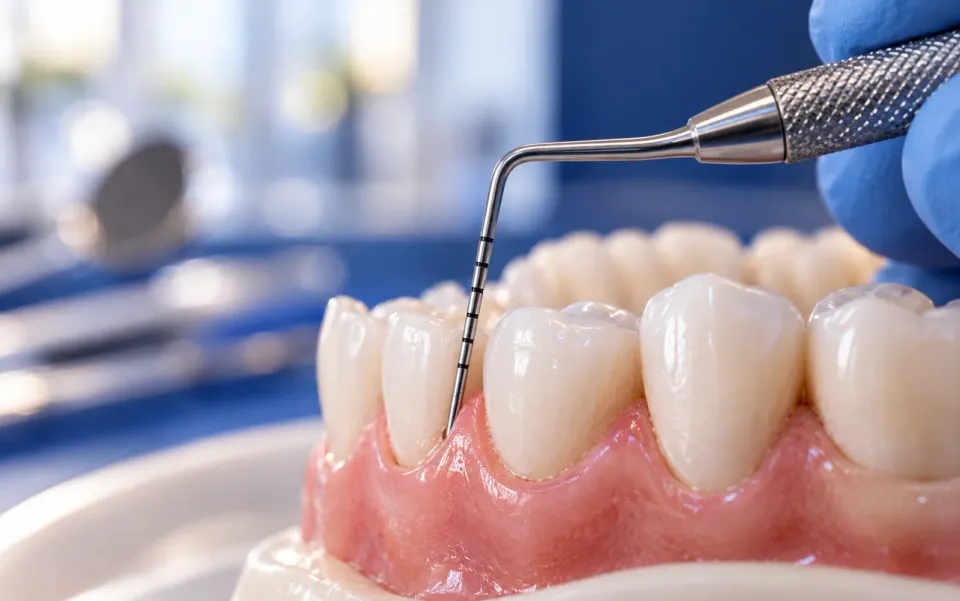

Treatment according to the German periodontal guideline
Procedure- Findings and applicationPocket depths, tooth mobility and X-rays determine the findings; for patients with statutory insurance we submit the application to the insurer.
- Explanation and treatment discussionWe explain causes, risk factors and the procedure.
- Oral hygiene instructionIndividual guidance on home care, because without it no treatment success lasts.
- Anti-infective therapyUnder local anaesthesia we clean the root surfaces in the gum pockets and remove bacterial deposits.
- Re-evaluationAfter a few months we check how well the inflammation has subsided.
- Surgical therapy if neededIf deep pockets remain, a further procedure can be useful.
- Supportive periodontal therapy (UPT)Regular follow-up appointments over at least two years keep the result stable.
Periodontitis and general health
Periodontitis and diabetes influence each other: poorly controlled blood sugar promotes the inflammation, and untreated periodontitis can make blood sugar harder to control. Smoking is also a major risk factor. More in our guide Periodontitis and diabetes.
Implants can also be affected by inflammation (peri-implantitis). Periodontitis should therefore always be treated before an implant is placed.
Are your gums bleeding or do your teeth look longer? Book your appointment at the Zahnarztpraxis St. Peter – via online booking or by phone on 0911 554181. You will find us at Hainstraße 25, 90461 Nürnberg (tram 6/10 to Scharrerstraße, patient parking via Scharrerstraße).
Frequently asked questions
Can periodontitis be cured?
In the vast majority of cases the inflammation can be stopped. However, lost bone usually does not grow back on its own. Consistent follow-up care is crucial so that the disease does not flare up again.
Is periodontitis contagious?
The bacteria involved can be transmitted. Whether periodontitis develops depends mainly on oral hygiene, immune defence, smoking and genetic factors.
Does health insurance pay for periodontitis treatment?
Yes. Systematic periodontitis therapy including supportive follow-up care is covered for patients with German statutory insurance after approval.