Dentist Nuremberg St. Peter
Bone Grafting with Your Own Blood
If the jawbone is not sufficient for an implant, we build it up – also with a concentrate from your own blood that can support healing.


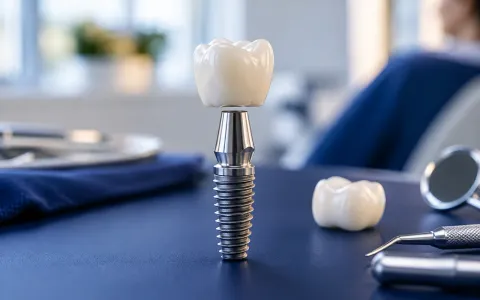
When a tooth is missing, the jawbone at that spot no longer receives the stimulus of chewing – and slowly recedes. Inflammation, periodontitis or a difficult extraction can also lead to bone loss. A stable implant, however, needs sufficient bone in height and width. The good news: in many cases it can be rebuilt.
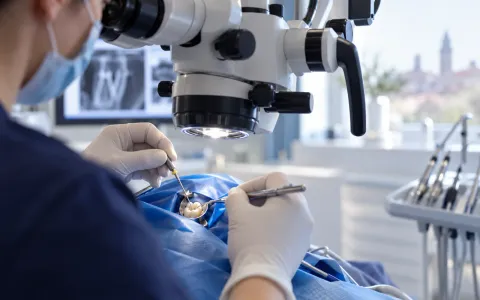
In bone grafting (augmentation), missing jawbone is supplemented with your own bone or bone substitute material so that an implant can heal in securely. A concentrate from your own blood (PRF) can serve as a natural membrane and healing aid.
What is PRF (platelet-rich fibrin)?
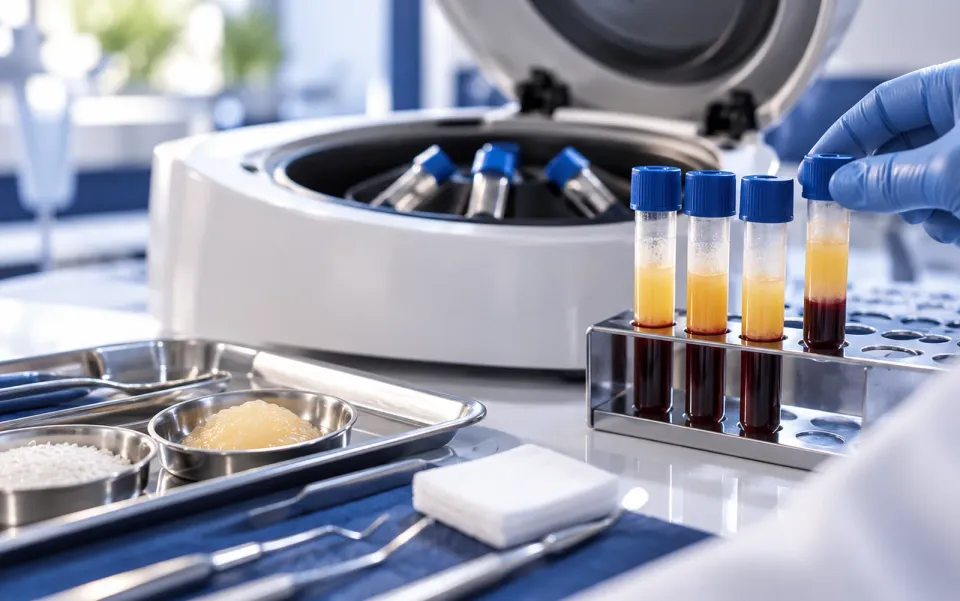
PRF stands for “platelet-rich fibrin”. Much like having blood taken at your GP’s, we take a small amount of blood and spin it in a centrifuge. This produces a gel-like concentrate rich in platelets and the body’s own growth factors. It is mixed with the grafting material or placed over the wound as a membrane. Because it comes from your own body, it is very well tolerated.

Which procedures are there?
- Socket preservation: directly after an extraction, the tooth socket is filled so that as little bone as possible is lost.
- Guided bone regeneration (GBR): smaller defects are built up with bone substitute and a membrane – often at the same time as the implant is placed.
- Sinus lift: in the back of the upper jaw, the floor of the maxillary sinus is raised and bone is built up underneath.
- Block grafting: for large defects a bone block is inserted; for this we work with specialised oral surgeons where needed.
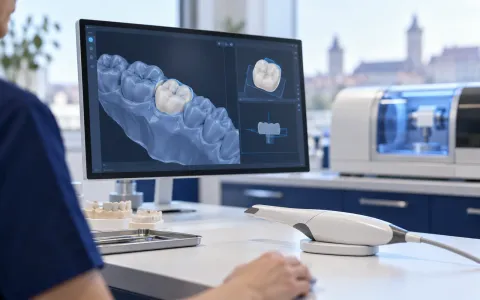
- DiagnosisAn X-ray and, if needed, a three-dimensional CBCT scan show how much bone is present.
- PlanningTogether we decide whether the bone is built up before or together with the implant.
- Blood sample and PRFThe concentrate from your own blood is prepared immediately before the procedure.
- Grafting under local anaesthesiaThe material is placed, covered with PRF or a membrane, and the wound is sutured.
- HealingDepending on the extent, the new bone needs a few months before it can bear load.
Swelling in the first few days after the procedure is normal. Cooling, rest, no smoking and careful but gentle oral hygiene support healing. You receive written aftercare instructions from us.
Costs
Bone grafting in connection with implants is usually a private service for patients with German statutory insurance. Private insurers reimburse depending on the policy. We give you a transparent cost plan in advance.
Have you been told that bone is missing for an implant? Book your appointment at the Zahnarztpraxis St. Peter – via online booking or by phone on 0911 554181. You will find us at Hainstraße 25, 90461 Nürnberg (tram 6/10 to Scharrerstraße, patient parking via Scharrerstraße).
Frequently asked questions
Is bone grafting painful?
The procedure is done under local anaesthesia. Afterwards swelling and wound pain can occur, which usually subside after a few days.
How long until an implant can be placed?
With smaller defects often at the same time. With larger grafts we usually wait a few months until the bone has healed.
Where does the bone substitute come from?
Depending on the situation we use your own bone collected during the procedure and/or tested bone substitute materials. We discuss the options with you beforehand.