Dental Crowns: Materials Compared
All-ceramic, zirconia, porcelain-fused-to-metal or gold: which crown for which tooth? Pros and cons at a glance.


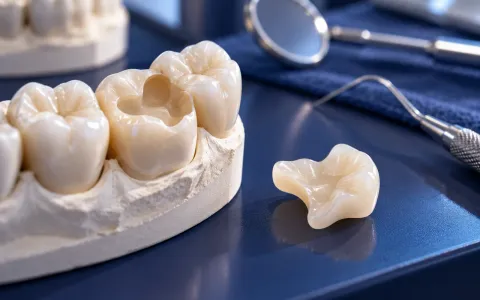
Crowns protect badly damaged or root-treated teeth. Which material is right depends on the tooth’s position, the load it bears, aesthetics and budget.
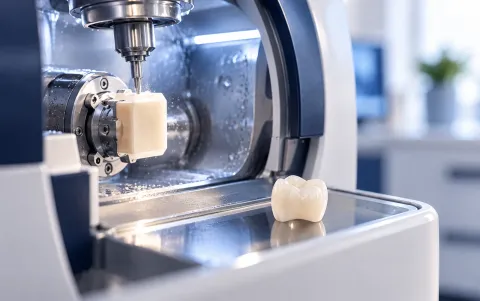
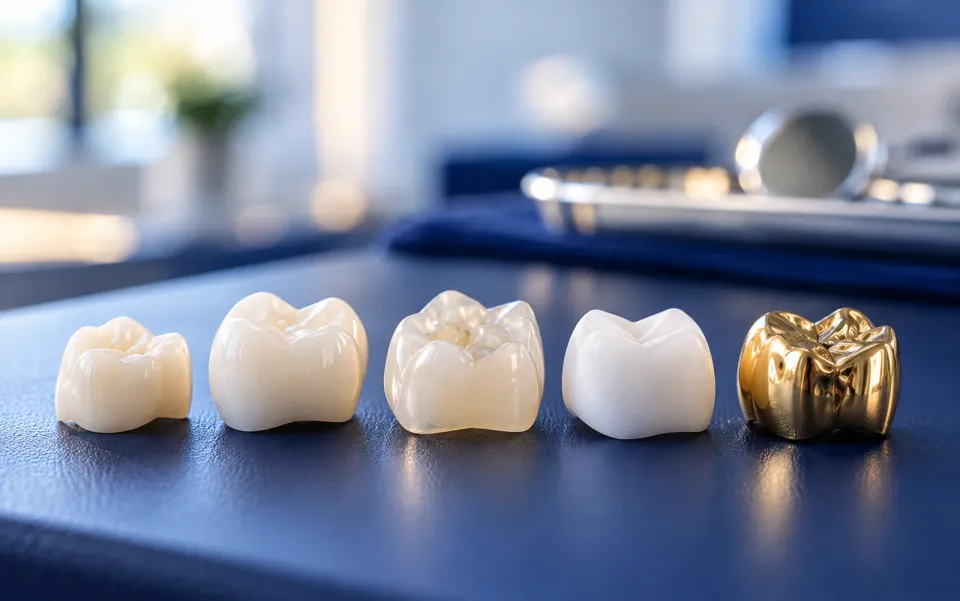
All-ceramic crowns (e.g. lithium disilicate or glass ceramic) look the most natural and are very well tolerated; zirconia is particularly fracture-resistant; porcelain-fused-to-metal is tried and tested but can show a dark margin; gold crowns are long-lasting but conspicuous. In the back teeth, modern ceramics are often the first choice today.
| Material | Aesthetics | Stability | Special features |
|---|---|---|---|
| Glass ceramic | very high | medium | ideal for inlays, veneers, front teeth |
| Lithium disilicate | high | high | crowns for front and back teeth, CAD/CAM |
| Zirconia | good to high | very high | bridges, high chewing forces |
| Porcelain-fused-to-metal | good | high | tried and tested, possibly a dark margin |
| Gold (full cast) | low | very high | long-lasting, visible |

What does health insurance pay?
The standard treatment (Regelversorgung) in the back teeth is usually a metal crown, and in the visible area a veneered crown. If you choose all-ceramic, you receive the same fixed subsidy and pay the extra amount yourself. See Fixed subsidy and bonus booklet.
Book your appointment at the Zahnarztpraxis St. Peter – via online booking or by phone on 0911 554181. You will find us at Hainstraße 25, 90461 Nürnberg (tram 6/10 to Scharrerstraße, patient parking via Scharrerstraße).
Frequently asked questions
Is ceramic better if I have allergies?
Ceramic is metal-free and considered very well tolerated – a good choice if you have a metal intolerance.
Can a ceramic crown break?
Modern ceramics are very resilient. If you grind your teeth heavily, you should wear a protective splint at night.
This article is a translation of our German guide and does not replace a personal examination and consultation. If you have symptoms, please see a dentist – for example at the Zahnarztpraxis St. Peter in Nuremberg.