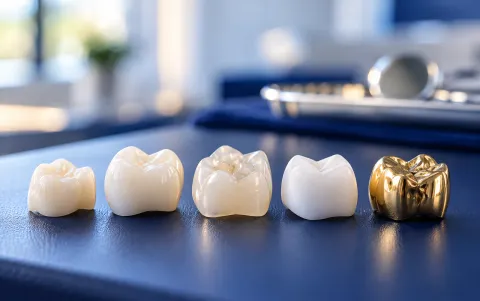
Inlay or Filling? A Comparison
Fill small defects, restore large ones with an inlay? When each solution makes sense – and what it costs.


A hole in a back tooth: is a filling enough, or is an inlay better? The answer depends mainly on the size of the defect.
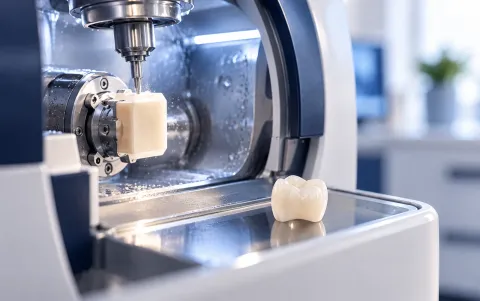
For small to medium defects, direct fillings made of composite or self-adhesive materials are a good choice. For large defects in the back teeth, a ceramic inlay is often more stable, better sealed and longer-lasting, because it is made outside the mouth for a precise fit.
| Composite filling | Ceramic inlay | |
|---|---|---|
| Defect size | small to medium | medium to large |
| Fabrication | built up in layers directly in the mouth | made with CAD/CAM or in the laboratory |
| Marginal seal | good | very good |
| Wear resistance/stability | good | very high |
| Appointments | one | usually two |
| Statutory insurance | covered depending on the material | insurer pays the amount for a filling, the rest is private |
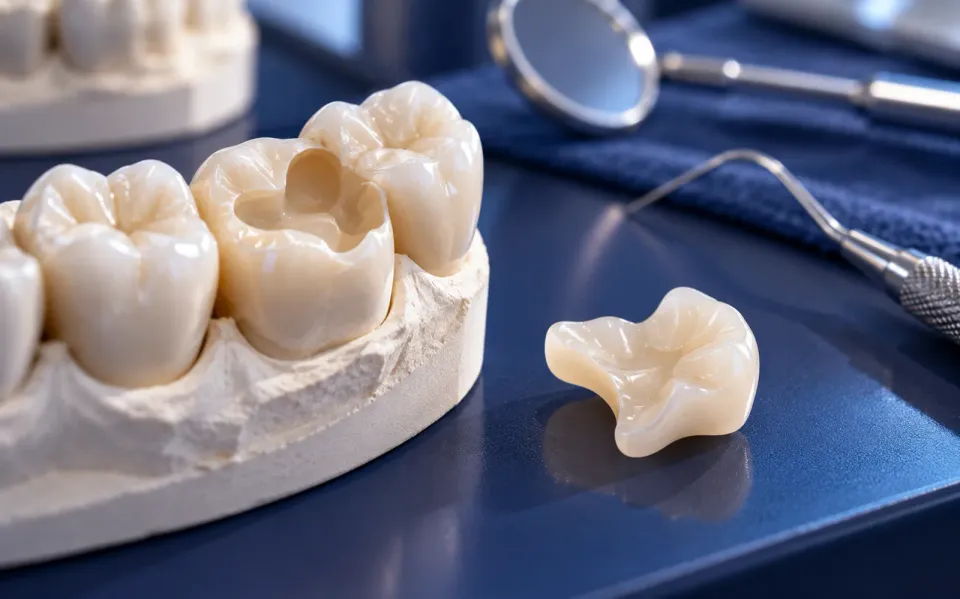

And what about onlays and partial crowns?
If cusps are weakened, they are covered as well – this is called an onlay or partial crown. This preserves more healthy tooth structure than a full crown.
Book your appointment at the Zahnarztpraxis St. Peter – via online booking or by phone on 0911 554181. You will find us at Hainstraße 25, 90461 Nürnberg (tram 6/10 to Scharrerstraße, patient parking via Scharrerstraße).
Frequently asked questions
Does an inlay last longer than a filling?
For large defects, usually yes. Ceramic is very wear-resistant and colour-stable.
Does fitting an inlay hurt?
The preparation is done under anaesthesia; the fitting itself is painless.
This article is a translation of our German guide and does not replace a personal examination and consultation. If you have symptoms, please see a dentist – for example at the Zahnarztpraxis St. Peter in Nuremberg.