How Much Does a Dental Implant Cost? Costs and Subsidies
What the cost of an implant depends on, what subsidy your health insurer pays and what to look out for in the cost plan.


Implants are a high-quality form of dental restoration – and one of the more expensive ones. That makes it all the more important to know the costs exactly beforehand. Reputable dental practices tell you the price after examination and planning in a written treatment and cost plan (Heil- und Kostenplan).
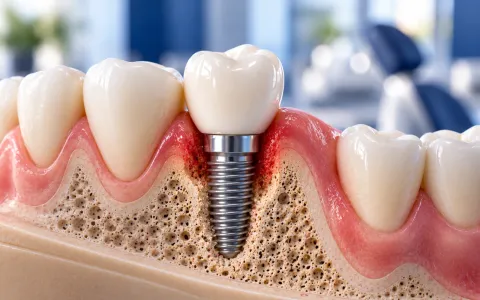
The cost of an implant is made up of planning, the implant itself, the surgical procedure, any bone grafting, the abutment and the crown. For a single-tooth implant with crown, the total cost in Germany is often in the range of about 2,000 to 4,000 euros. Patients with statutory health insurance receive the fixed subsidy for the standard treatment – with a bonus booklet up to 75 % of its cost.
What do the costs depend on?
- number of implants and complexity of the situation
- necessary diagnostics (e.g. a 3D scan/CBCT)
- bone grafting or sinus lift
- type of restoration: single crown, bridge, denture on implants
- crown material (ceramic, zirconia)
- laboratory costs
What does German statutory health insurance pay?
Implants themselves are not part of the standard treatment (Regelversorgung) – the basic solution the statutory insurers define for each finding. However, the insurer pays the finding-based fixed subsidy (Festzuschuss) – i.e. the fixed amount it provides for the standard solution (usually a bridge) for the respective finding. This subsidy also applies if you decide on an implant.
| Bonus booklet | Fixed subsidy |
|---|---|
| without regular check-ups | 60 % of the standard treatment |
| 5 years without gaps | 70 % |
| 10 years without gaps | 75 % |
| hardship case (low income) | up to 100 % of the standard treatment |
Explained in detail in the article Fixed subsidy and bonus booklet.
Supplementary dental insurance and payment in instalments
Supplementary dental insurance can cover a large part of your own contribution – provided it was taken out before treatment began and no waiting period is still running. For larger treatments, financing via a billing company is often possible as well; just ask us.
Be wary of tempting offers with very low flat-rate prices: planning, bone grafting, the abutment or the crown are often not included. Always compare cost plans in full.

Would you like an individual cost plan? Book your appointment at the Zahnarztpraxis St. Peter – via online booking or by phone on 0911 554181. You will find us at Hainstraße 25, 90461 Nürnberg (tram 6/10 to Scharrerstraße, patient parking via Scharrerstraße).
Frequently asked questions
Why can’t the price be quoted as a flat rate in advance?
Because the amount of bone, the number of implants and the type of crown vary greatly. After the examination you receive an exact plan.
Does health insurance ever cover an implant in full?
Only in rare exceptional cases defined by law, for example after certain tumour treatments or with congenital malformations.
This article is a translation of our German guide and does not replace a personal examination and consultation. If you have symptoms, please see a dentist – for example at the Zahnarztpraxis St. Peter in Nuremberg.