Peri-implantitis: Recognising and Preventing Inflammation Around Implants
The greatest risk to an implant is inflammation. How to recognise it and how to prevent it.


Implants cannot get tooth decay – but the tissue around them can become inflamed. Peri-implantitis is the most common reason why implants are lost later on. The good news: with good care and regular aftercare it can usually be prevented.
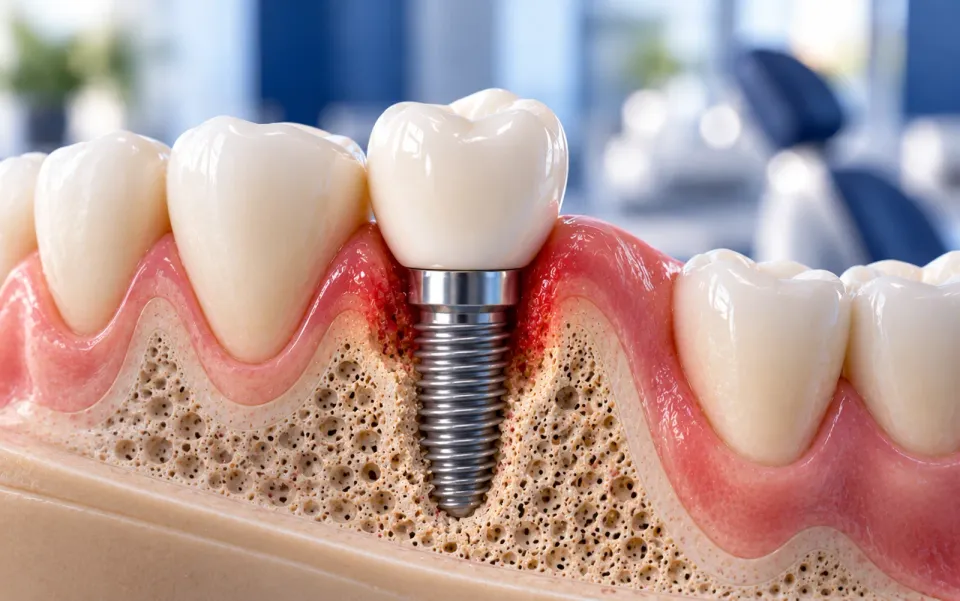
Peri-implantitis is a bacterial inflammation of the gums and bone around an implant. It often starts as a seemingly harmless gum inflammation (peri-implant mucositis) with bleeding. If left untreated, bone is lost and the implant can become loose. Risk factors include poor oral hygiene, smoking, diabetes and previous periodontitis.
Warning signs
- bleeding when brushing or cleaning around the implant
- red, swollen gums
- pus or an unpleasant taste
- visible implant thread, receding gums
- loosening (a late sign)

Treatment
In the early stages, a thorough professional cleaning of the implant surface combined with better home care is often enough. If the inflammation is advanced, surgical measures for cleaning and, if necessary, bone grafting are required. Our dentist, Hassan Al-Johmani M.Sc., completed further training in peri-implantitis therapy back in 2015.
Prevention
Prevention- Clean thoroughlytwice a day, with interdental brushes or implant floss.
- Aftercareregular check-ups and professional cleaning, several times a year if your risk is higher.
- Tackle risk factorsstop smoking, keep blood sugar well controlled, have periodontitis treated.
Book your appointment at the Zahnarztpraxis St. Peter – via online booking or by phone on 0911 554181. You will find us at Hainstraße 25, 90461 Nürnberg (tram 6/10 to Scharrerstraße, patient parking via Scharrerstraße).
Frequently asked questions
Can an implant be rejected?
A true rejection like with organ transplants practically does not occur. Implants are usually lost through inflammation or overloading.
How often should I have check-ups with implants?
At least once, often twice a year – depending on your risk.
This article is a translation of our German guide and does not replace a personal examination and consultation. If you have symptoms, please see a dentist – for example at the Zahnarztpraxis St. Peter in Nuremberg.