Botox for Bruxism and TMD: Effect, Evidence, Limits
Botulinum toxin for teeth grinding and jaw pain: how it works, what studies show – and why it is not a standard therapy but a well-founded complement.


Treating temporomandibular disorders (TMD, in German “CMD”) and bruxism with botulinum toxin has become considerably more important in Germany in recent years. The updated German S3 guideline “Diagnosis and treatment of bruxism” lists it for the first time in a chapter of its own as a possible measure. What is behind it – and who is it suitable for?
Botulinum toxin A (“Botox”) relaxes overactive chewing muscles for a few months and can thereby relieve pain in bruxism and muscle-related TMD. Studies show a reduction in pain compared with placebo, but no advantage in jaw mobility. The treatment is off-label use and only makes sense after thorough diagnostics, when the splint, physiotherapy and stress management are not enough.
What is TMD – and what does bruxism have to do with it?
TMD refers to a functional disorder of the chewing system with complaints such as jaw joint pain, muscle tension and limited mouth opening. It is often linked to bruxism, i.e. grinding or clenching the teeth – at night during sleep or during the day, often unconsciously. More on the signs: TMD: symptoms, causes and treatment.
How does botulinum toxin work in the chewing muscle?
Botulinum toxin A is injected specifically into the affected chewing muscles, usually the large masseter muscle (musculus masseter), occasionally also the temporal muscle (musculus temporalis). At the motor end plate it blocks signal transmission from the nerve to the muscle. The overactive muscle relaxes temporarily – and this can indirectly lead to less pain. The effect begins after a few days and usually lasts three to four months.
Evidence: effective, but not a cure-all
| Question | What the studies show |
|---|---|
| Pain | A systematic review confirms that botulinum toxin A can significantly reduce pain intensity compared with placebo. |
| Muscle activity | The activity of the chewing muscles measured by EMG decreases. |
| Mouth opening and quality of life | can improve, as can psychosocial complaints |
| Jaw mobility | no advantage over placebo or standard therapies |
| Risks | The risk of undesirable effects on muscle and bone tissue is considered higher than with other treatments. |
In addition, the studies differ greatly in patient selection, the muscles treated, dosage, injection technique and follow-up. Standardised dosing schemes and robust long-term data are still lacking.
Requirements: why Botox is not a standard therapy
The use of botulinum toxin for TMD and bruxism is a complementary option for carefully selected patients. Clear requirements apply:
Requirements- Strict indicationThe injection is only considered once comprehensive diagnostics including a clinical functional analysis have been carried out and conservative therapies – occlusal splint, physiotherapy, stress management – have been exhausted or have not been sufficiently successful.
- Off-label useIn Germany the products are not officially approved for TMD or bruxism. Comprehensive information about this as well as about the effect, limits, alternatives and side effects is mandatory.
- QualificationThe treatment is part of dentistry but not part of regular dental training. Dentists demonstrate their knowledge through specialised further training; many professional liability insurers require this proof.
- Precise injectionUltrasound-guided injection is recommended in order to target anatomical structures safely.
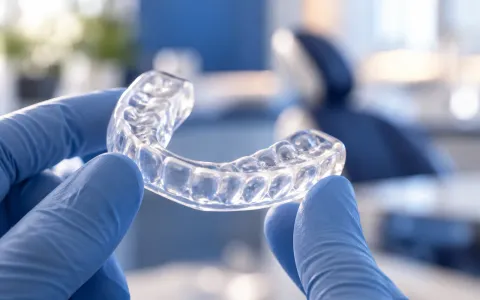
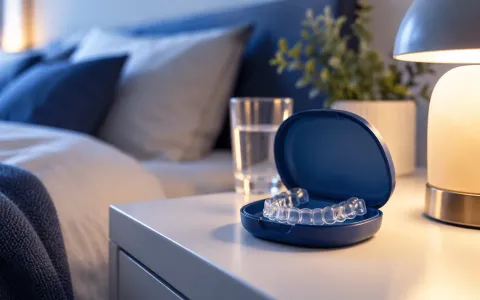
Botulinum toxin treats the overactivity of the muscle, not its cause. Stress, sleep problems or a disturbed bite remain an issue – and the splint continues to protect the teeth from wear.
Conclusion
In Germany, botulinum toxin for TMD is a scientifically recognised but clearly regulated complementary therapy. For bruxism that does not respond to other treatment and for muscle-related TMD complaints it can be a sensible option – provided the indication is strict, conservative measures have been exhausted, you have been informed about the off-label use and the treatment is carried out by a specially qualified practitioner.
Would you like to know whether botulinum toxin is an option for you? Book your appointment at the Zahnarztpraxis St. Peter – via online booking or by phone on 0911 554181. You will find us at Hainstraße 25, 90461 Nürnberg (tram 6/10 to Scharrerstraße, patient parking via Scharrerstraße).
Frequently asked questions
Is Botox approved for teeth grinding?
No. In Germany, botulinum toxin is not approved for TMD and bruxism; its use is off-label and requires comprehensive information beforehand.
Does Botox help permanently against grinding?
No. The effect usually lasts three to four months. Botulinum toxin relaxes the muscle but does not remove the cause of the grinding.
Who may inject Botox for TMD?
Dentists may carry out the treatment as part of dentistry, but should demonstrate their knowledge through specialised further training.
This article is a translation of our German guide and does not replace a personal examination and consultation. If you have symptoms, please see a dentist – for example at the Zahnarztpraxis St. Peter in Nuremberg.