Teeth Grinding: What Really Helps?
Many people grind their teeth at night without noticing. How to recognise it, what a night-time splint does and what you can do yourself.


Grinding generates forces that can be many times higher than normal chewing pressure – often for hours during the night. The consequences: worn-down teeth, broken fillings, tense muscles.
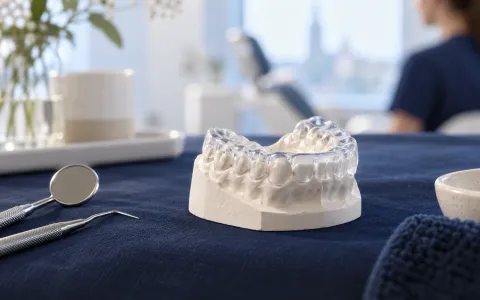
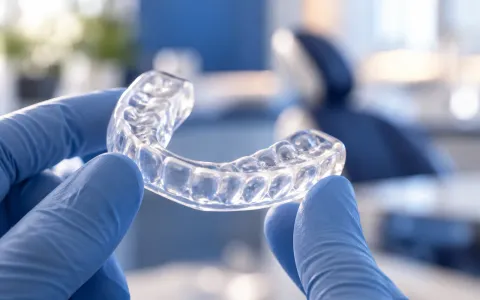
The main help against the consequences of grinding is an individually made occlusal splint – today usually scanned digitally and printed – that is worn at night. It protects the teeth and relieves the muscles. Against the cause, stress reduction, relaxation techniques and, if needed, physiotherapy help.
Signs that you grind
- tense jaw or headaches in the morning
- flattened biting edges, shiny wear facets
- tooth imprints on the tongue or cheek
- your partner mentions grinding noises

- Raise awarenessduring the day: “lips together, teeth apart, tongue relaxed”.
- Relaxprogressive muscle relaxation, exercise, good sleep habits.
- No constant gum chewingit trains the chewing muscles even more.
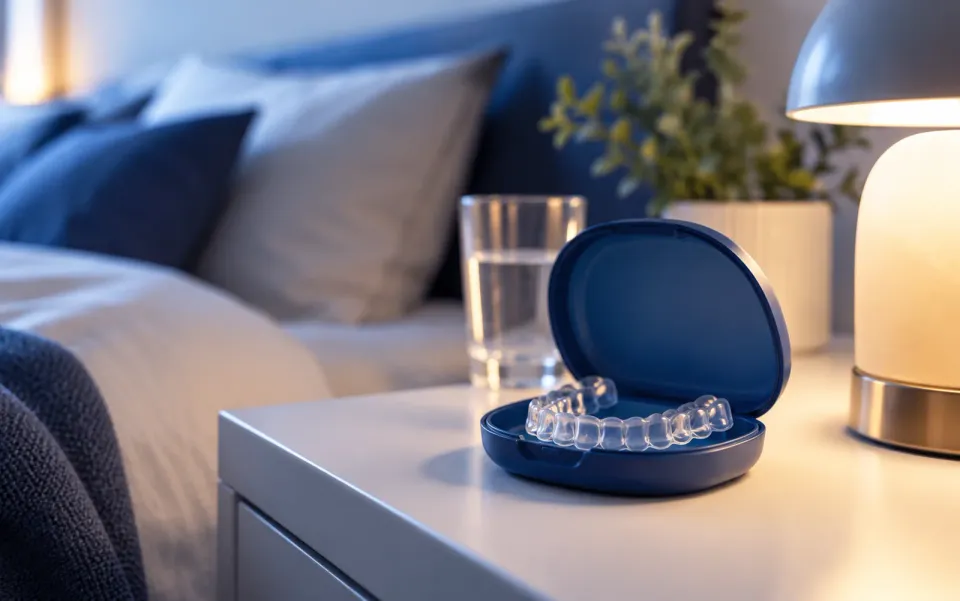
- Wear the splintat night, and have it checked regularly.
If the splint, relaxation and physiotherapy are not enough, botulinum toxin can be a complementary option for painfully overactive chewing muscles – after thorough diagnostics.
Book your appointment at the Zahnarztpraxis St. Peter – via online booking or by phone on 0911 554181. You will find us at Hainstraße 25, 90461 Nürnberg (tram 6/10 to Scharrerstraße, patient parking via Scharrerstraße).
Frequently asked questions
Does a splint from the chemist’s help?
Ready-made splints usually fit poorly and can make complaints worse. An individually scanned and printed splint fits much better.
Does health insurance pay for the splint?
If it is medically necessary, the occlusal splint is covered by German statutory health insurance.
This article is a translation of our German guide and does not replace a personal examination and consultation. If you have symptoms, please see a dentist – for example at the Zahnarztpraxis St. Peter in Nuremberg.