3D-Printed Occlusal Splint: What Is Different?
Scanning instead of impression trays, printing instead of thermoforming: why we now make night guards and occlusal splints by 3D printing.


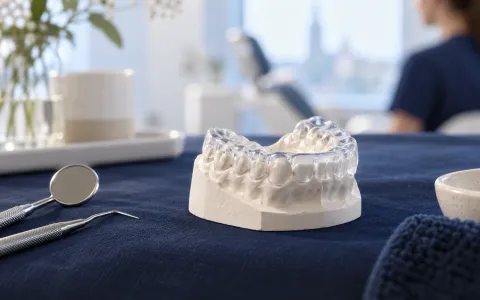
For a long time, the thermoformed splint was the usual approach: an impression with an impression tray, a plaster model, a heated plastic sheet drawn over the model and then finished by hand. Today this can be done digitally – and more precisely. We make occlusal splints and sports mouthguards by 3D printing.
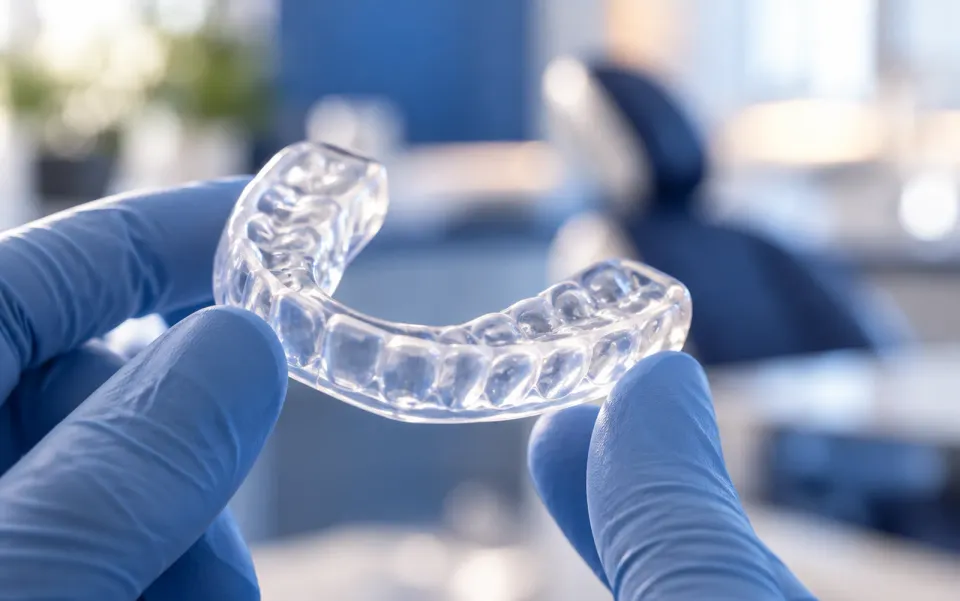
For a printed occlusal splint, the teeth are scanned digitally, the splint is designed on the computer and printed layer by layer from a dental resin. Compared with a thermoformed splint, the fit is more precise and reproducible, the biting surface is matched directly to the bite, and if the splint is lost it can be remade from the stored data.
Thermoformed or printed – the comparison
| Thermoformed splint | Printed splint | |
|---|---|---|
| Impression | impression tray with impression paste, plaster model | digital scan – no impression tray |
| Manufacture | heated sheet is drawn over the model | designed digitally, printed layer by layer |
| Fit | depends on impression, plaster and sheet | precise and reproducible |
| Biting surface | usually built up afterwards | matched digitally to the bite from the start |
| Replacement if lost | new impression needed | reprint from stored data |

How the splint is made
Procedure- Functional diagnosticsWe examine the muscles, jaw joints and bite and clarify which splint makes sense.
- ScanThe upper and lower jaw and the bite are recorded digitally in a few minutes.
- DesignThickness, biting surface and guiding surfaces are planned on screen.
- 3D printingThe splint is printed from a resin approved for use in the mouth and then finished.
- Fitting and check-upWe check the fit and bite and make adjustments in the first few weeks.
Who is the printed splint suitable for?
- for night-time teeth grinding and clenching
- for TMD with jaw and muscle pain
- to protect ceramic crowns, veneers and implants in people who grind
- as a custom sports mouthguard
- with a strong gag reflex, because no impression tray is needed
The splint protects the teeth and relieves the muscles, but on its own it does not remove the cause of grinding. If the splint, physiotherapy and relaxation are not enough, botulinum toxin can be a complementary option.
Do you need a new occlusal splint? Book your appointment at the Zahnarztpraxis St. Peter – via online booking or by phone on 0911 554181. You will find us at Hainstraße 25, 90461 Nürnberg (tram 6/10 to Scharrerstraße, patient parking via Scharrerstraße).
Frequently asked questions
Is a printed splint strong enough?
Yes. The splint is made from a dental resin intended for long-term use in the mouth, and its thickness is adapted to your situation.
What do I do if the splint is lost or breaks?
Because the design data remain stored, the splint can usually be reprinted without a new scan – provided your teeth have not changed.
Does health insurance pay for the printed splint?
German statutory health insurance contributes to a medically necessary occlusal splint. We discuss with you in advance whether any additional costs arise.
This article is a translation of our German guide and does not replace a personal examination and consultation. If you have symptoms, please see a dentist – for example at the Zahnarztpraxis St. Peter in Nuremberg.