Chalky Teeth (MIH): What Parents Should Know
Whitish-yellow spots, sensitive molars: chalky teeth are common. How they are recognised and protected.


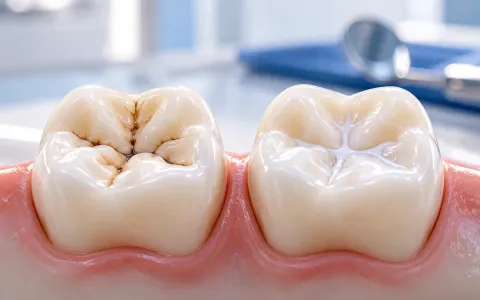
Chalky teeth – technically molar incisor hypomineralisation (MIH) – are a disorder in the formation of tooth enamel. It usually affects the first permanent molars and often the incisors as well. The causes are not yet fully understood.
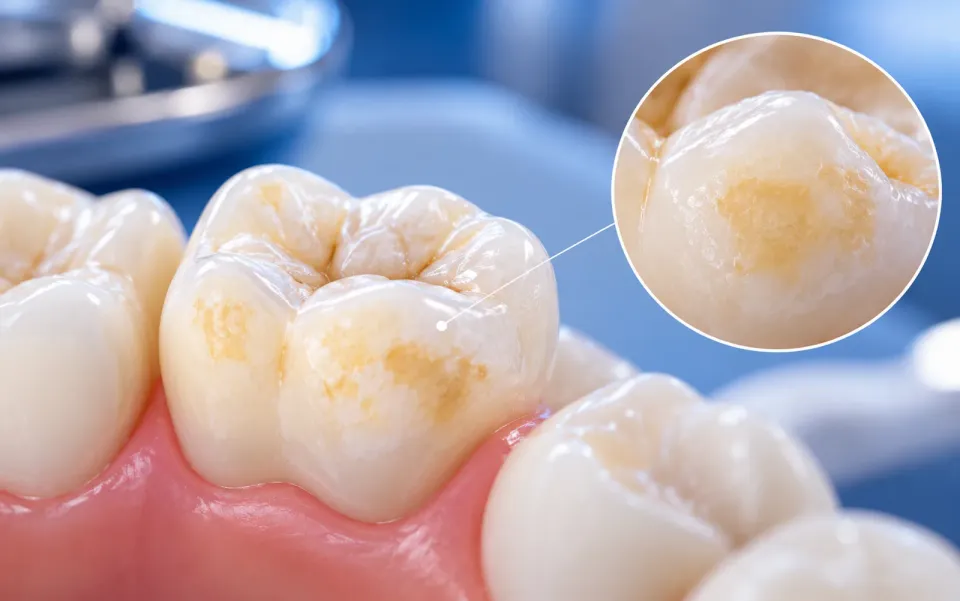
With MIH, the enamel is softer and more porous. Typical signs are creamy-white to yellow-brown spots, sensitivity when brushing or to cold, and an increased risk of tooth decay. Depending on severity, it is treated with fluoride, sealing, fillings or crowns – the earlier, the better.
How do you recognise chalky teeth?
- sharply defined whitish-yellow or brownish spots
- enamel crumbles away shortly after the tooth comes through
- the child avoids brushing because it hurts
- sensitivity to cold and heat

Treatment
Therapy- Early check-upas soon as the first permanent molars come through (around age 6).
- Fluoridevarnish and toothpaste strengthen the enamel.
- Sealingprotects the chewing surfaces.
- Fillings/crownsfor defects, gently and with as little pain as possible.
Book your appointment at the Zahnarztpraxis St. Peter – via online booking or by phone on 0911 554181. You will find us at Hainstraße 25, 90461 Nürnberg (tram 6/10 to Scharrerstraße, patient parking via Scharrerstraße).
Frequently asked questions
Are chalky teeth the result of poor care?
No. MIH develops while the tooth is being formed, long before it comes through. Parents are not to blame.
Is MIH covered by health insurance?
For children with German statutory insurance, the necessary treatments are largely covered.
This article is a translation of our German guide and does not replace a personal examination and consultation. If you have symptoms, please see a dentist – for example at the Zahnarztpraxis St. Peter in Nuremberg.