Fissure Sealing: Useful Protection Against Decay?
The grooves of the molars are hotspots for decay. How sealing protects them and who pays for it.


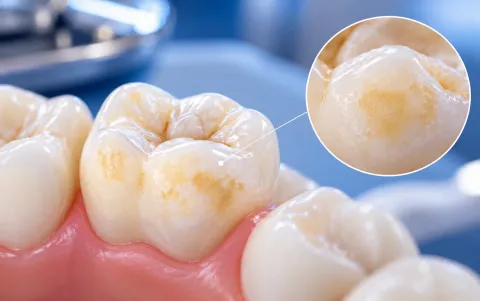
The chewing surfaces of the molars have fine grooves and pits, the fissures. Plaque settles there particularly easily – and the toothbrush can hardly get in. This is where most tooth decay in children develops.
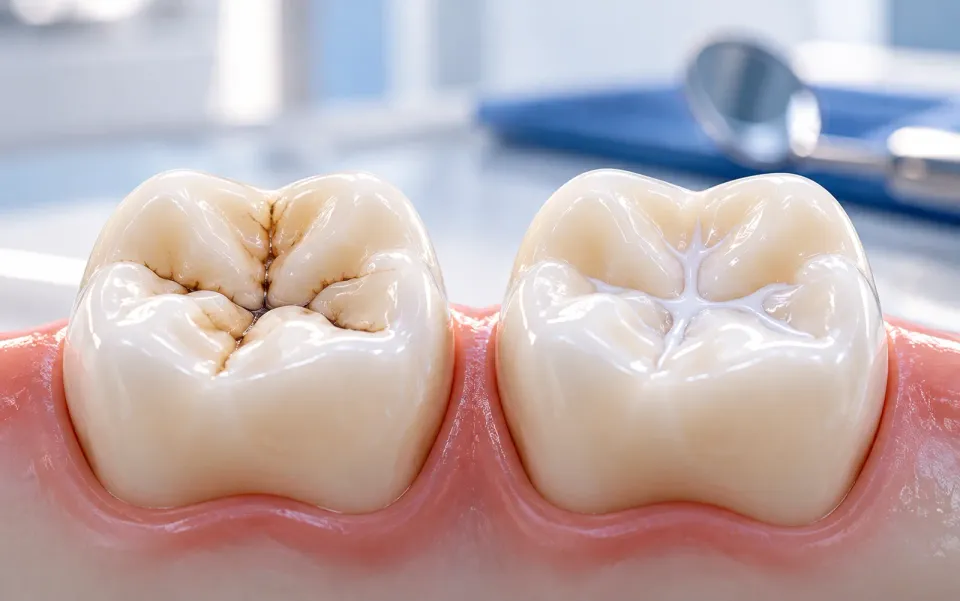
In fissure sealing, the grooves of the molars are closed with a free-flowing resin. It does not hurt, takes a few minutes and significantly lowers the risk of decay. For the large permanent molars (the first and second permanent molars), German statutory health insurance pays for children and young people aged 6 to 17.
- CleaningThe chewing surface is cleaned thoroughly.
- PreparationThe enamel is roughened so that the sealant adheres.
- ApplicationThe sealant flows into the fissures.
- Curingwith light, then the bite is checked.

How long does the sealing last?
Often several years. At check-ups we see whether it is still intact and touch it up if needed.
Book your appointment at the Zahnarztpraxis St. Peter – via online booking or by phone on 0911 554181. You will find us at Hainstraße 25, 90461 Nürnberg (tram 6/10 to Scharrerstraße, patient parking via Scharrerstraße).
Frequently asked questions
Do adults need sealing too?
In individual cases it can be useful, but it is then a private service.
Is the sealant harmful?
Modern sealants are considered safe; after curing, only tiny amounts are released.
This article is a translation of our German guide and does not replace a personal examination and consultation. If you have symptoms, please see a dentist – for example at the Zahnarztpraxis St. Peter in Nuremberg.