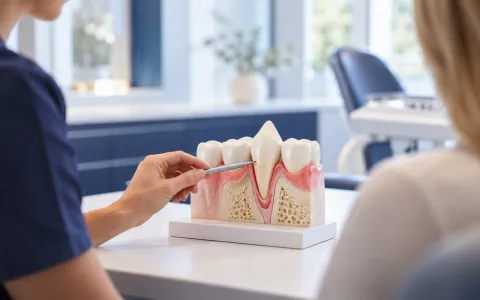
Recognising Periodontitis: The Most Important Signs
Periodontitis does not hurt for a long time. You should still take these signs seriously.


Periodontitis is one of the most common chronic diseases of all. The tricky part: it causes no pain for a long time. Many people only notice it when their teeth become loose.
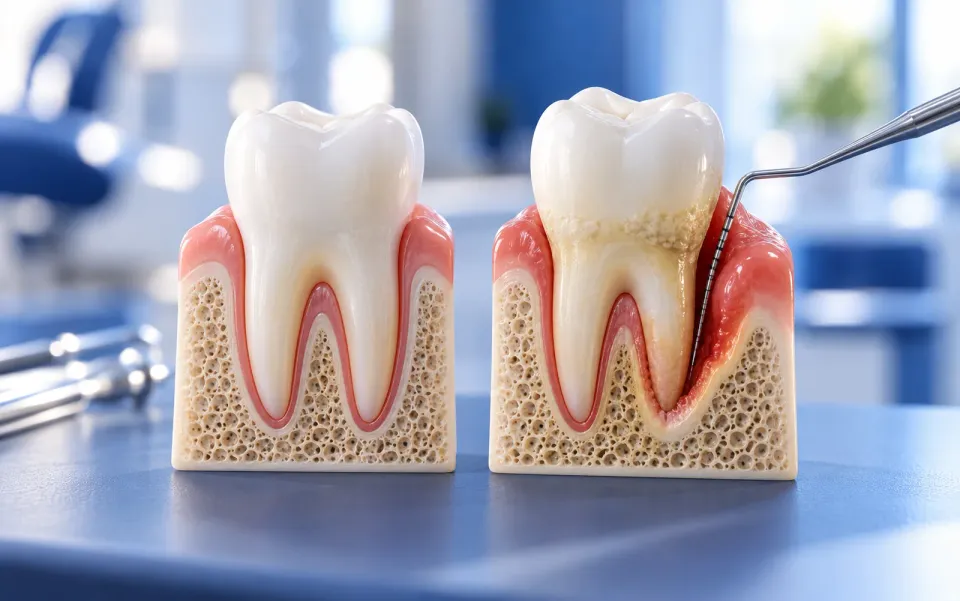
Typical signs of periodontitis are bleeding gums, red or swollen gums, receding gums, bad breath, sensitive tooth necks and teeth that shift or become loose. It can only be diagnosed reliably by measuring the gum pockets at the dentist.
Seven warning signs
- bleeding gums when brushing or eating
- red, swollen gums
- receding gums, teeth that look “longer”
- persistent bad breath or a bad taste
- pus at the gum line
- gaps appear, teeth shift
- loose teeth, a changed bite

Risk factors
- inadequate oral hygiene
- smoking
- diabetes, especially when poorly controlled
- stress, genetic predisposition
- hormonal changes (e.g. pregnancy)
Patients with German statutory insurance are entitled to the Periodontal Screening Index (PSI) every two years – a quick measurement that shows whether treatment is needed.
Book your appointment at the Zahnarztpraxis St. Peter – via online booking or by phone on 0911 554181. You will find us at Hainstraße 25, 90461 Nürnberg (tram 6/10 to Scharrerstraße, patient parking via Scharrerstraße).
Frequently asked questions
Is “Parodontose” the same as periodontitis?
In everyday German both terms are used interchangeably. Technically, periodontitis is the inflammatory disease – and that is almost always what is meant.
Can children get periodontitis?
Rarely, but it is possible. Gum inflammation (gingivitis), on the other hand, is common in children and teenagers.
This article is a translation of our German guide and does not replace a personal examination and consultation. If you have symptoms, please see a dentist – for example at the Zahnarztpraxis St. Peter in Nuremberg.