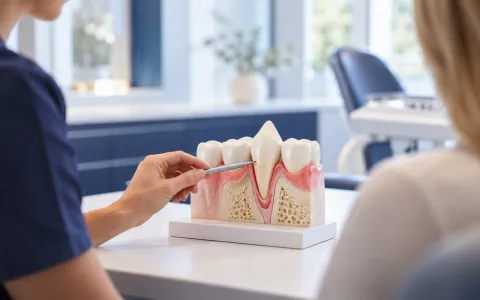
Periodontitis Treatment: Process and Insurance Cover
Since the German PAR guideline of 2021, treatment has followed a clear structure – from the application to two years of aftercare.


In most cases periodontitis can be treated well. Since July 2021, the PAR guideline (the German statutory insurance rules for periodontal treatment) has set out a clearly structured treatment pathway for patients with statutory insurance – including aftercare.
Treatment consists of the examination and application, an information and therapy consultation, oral hygiene instruction, anti-infective therapy (deep cleaning of the root surfaces), a re-evaluation after a few months, surgical therapy if needed, and supportive periodontal therapy (UPT) over two years. Once approved, it is covered by statutory health insurance.
- Examination and applicationpocket measurement, X-rays, classification by stage and grade; application to the health insurer.
- Information and therapy consultation (ATG)causes, risks, goals.
- Oral hygiene instruction (MHU)practical training with your own cleaning aids.
- Anti-infective therapy (AIT)cleaning of the pockets and root surfaces under local anaesthesia.
- Re-evaluation (BEV)after about three to six months.
- Surgical therapy (CPT)only if deep pockets remain.
- UPTregular aftercare over two years, frequency depending on the grade.


Your cooperation decides the outcome: daily care at home and the aftercare appointments are just as important as the treatment itself.
Book your appointment at the Zahnarztpraxis St. Peter – via online booking or by phone on 0911 554181. You will find us at Hainstraße 25, 90461 Nürnberg (tram 6/10 to Scharrerstraße, patient parking via Scharrerstraße).
Frequently asked questions
Does the deep cleaning hurt?
It is done under local anaesthesia. Afterwards the teeth can be sensitive for a few days.
How long does the whole treatment take?
The active phase takes a few months, the aftercare (UPT) two years – after that it continues with regular preventive care.
This article is a translation of our German guide and does not replace a personal examination and consultation. If you have symptoms, please see a dentist – for example at the Zahnarztpraxis St. Peter in Nuremberg.