Dentist Nuremberg St. Peter
Splint Therapy & Jaw Function Diagnostics (TMD)
Grinding, clenching, jaw pain or tension up to the neck: we analyse your chewing system and relieve it with an individual occlusal splint.


TMD (in German “CMD”, craniomandibular dysfunction) is a functional disorder in the interplay of teeth, chewing muscles and jaw joints. Causes can be grinding or clenching (often stress-related and at night), gaps, misaligned teeth or poorly fitting dental restorations. The consequences range from worn teeth to pain that at first you would not connect with your teeth at all.
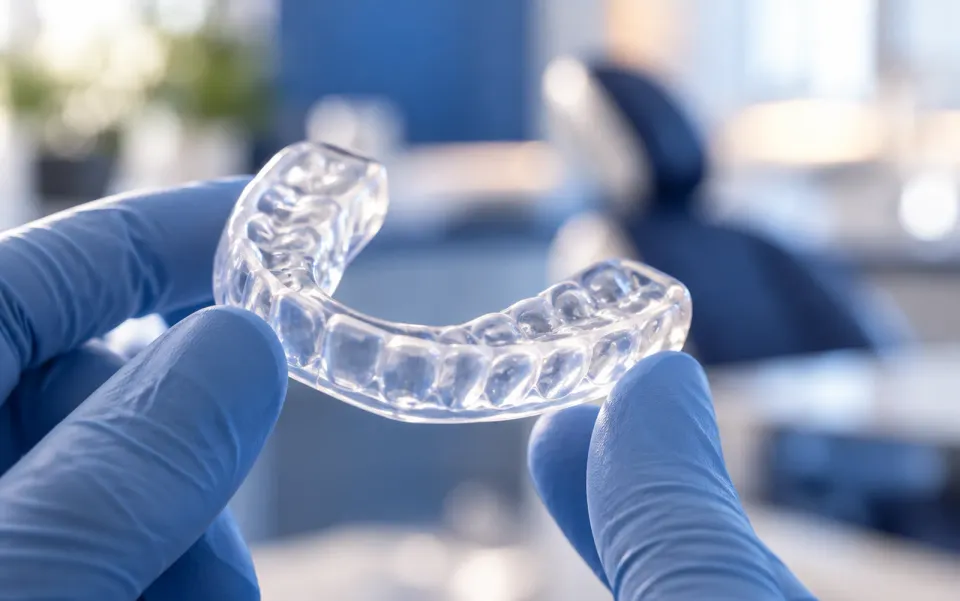
In TMD, the teeth, chewing muscles and jaw joints do not work together smoothly. Typical signs are jaw pain, clicking, morning tension and worn teeth. An individually 3D-printed occlusal splint protects the teeth and can relieve muscles and joints – often in combination with physiotherapy.
Possible signs of TMD
- pain or tension in the jaw, temples, neck or shoulders
- clicking or grinding in the jaw joint, limited mouth opening
- headaches, especially in the morning
- earache, a feeling of pressure or ringing in the ears with no ENT findings
- worn biting edges, sensitive tooth necks, cracks in the enamel
- broken fillings or ceramics

Diagnostics: what we examine
Functional diagnostics- ConsultationWhen do symptoms occur? Are you under stress? Are there sleep problems, past accidents or previous treatment?
- Clinical functional analysisWe palpate chewing muscles and jaw joints, measure mouth opening and check movements and sounds.
- Bite and teethWe look for signs of wear, premature contacts, gaps and existing restorations.
- Further assessmentIf necessary, we add X-rays or recommend physiotherapy, an orthopaedist or an ENT specialist so that we can treat you together.
The occlusal splint
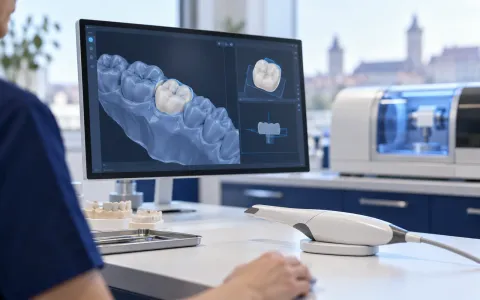
The splint is designed on the computer after a digital scan and made at our practice by 3D printing – instead of being thermoformed over a plaster model as in the past. This makes the fit precise and reproducible, and if the splint is lost it can be remade from the stored data. It is usually worn at night. It distributes forces evenly, protects the tooth structure from further wear and can relax the muscles. In the first weeks we check and adjust the splint until it fits optimally. Relaxation exercises, physiotherapy and a conscious approach to stress also help.
| Complaint | What often helps? |
|---|---|
| Grinding at night | occlusal splint, stress reduction, sleep assessment |
| Clenching during the day | awareness (“lips together, teeth apart”), exercises |
| Tense chewing muscles | splint, warmth, physiotherapy / manual jaw therapy |
| Poorly fitting restorations | bite correction, new restoration if needed |
When the splint alone is not enough: botulinum toxin
With severe grinding or clenching and painfully overactive chewing muscles, injecting botulinum toxin into the chewing muscle can be a complementary option – after thorough diagnostics and once conservative measures have been exhausted. The current German S3 guideline on bruxism gives it its own chapter. More: Botulinum toxin for TMD & teeth grinding.
Costs
A medically necessary occlusal splint is generally covered for patients with German statutory insurance. A detailed clinical or instrumental functional analysis is a private service. We inform you in advance.
Do you grind your teeth at night or have jaw pain? Book your appointment at the Zahnarztpraxis St. Peter – via online booking or by phone on 0911 554181. You will find us at Hainstraße 25, 90461 Nürnberg (tram 6/10 to Scharrerstraße, patient parking via Scharrerstraße).
Frequently asked questions
Do I have to wear the splint every night?
Usually yes, at least in the first phase of treatment. How long and how often depends on your symptoms and is adjusted at the check-ups.
Can a splint stop the grinding?
The splint protects the teeth and relieves muscles and joints. It does not remove the cause – often stress – on its own. That is why we often combine it with relaxation and physiotherapy.
What helps if the splint is not enough?
Additionally, physiotherapy, relaxation techniques and – with painfully overactive chewing muscles and after thorough diagnostics – treatment with botulinum toxin can be considered.
How do I know whether I grind at night?
Signs are jaw pain or headaches in the morning, tense cheeks, worn teeth or comments from your partner. During the examination we see typical signs of wear.